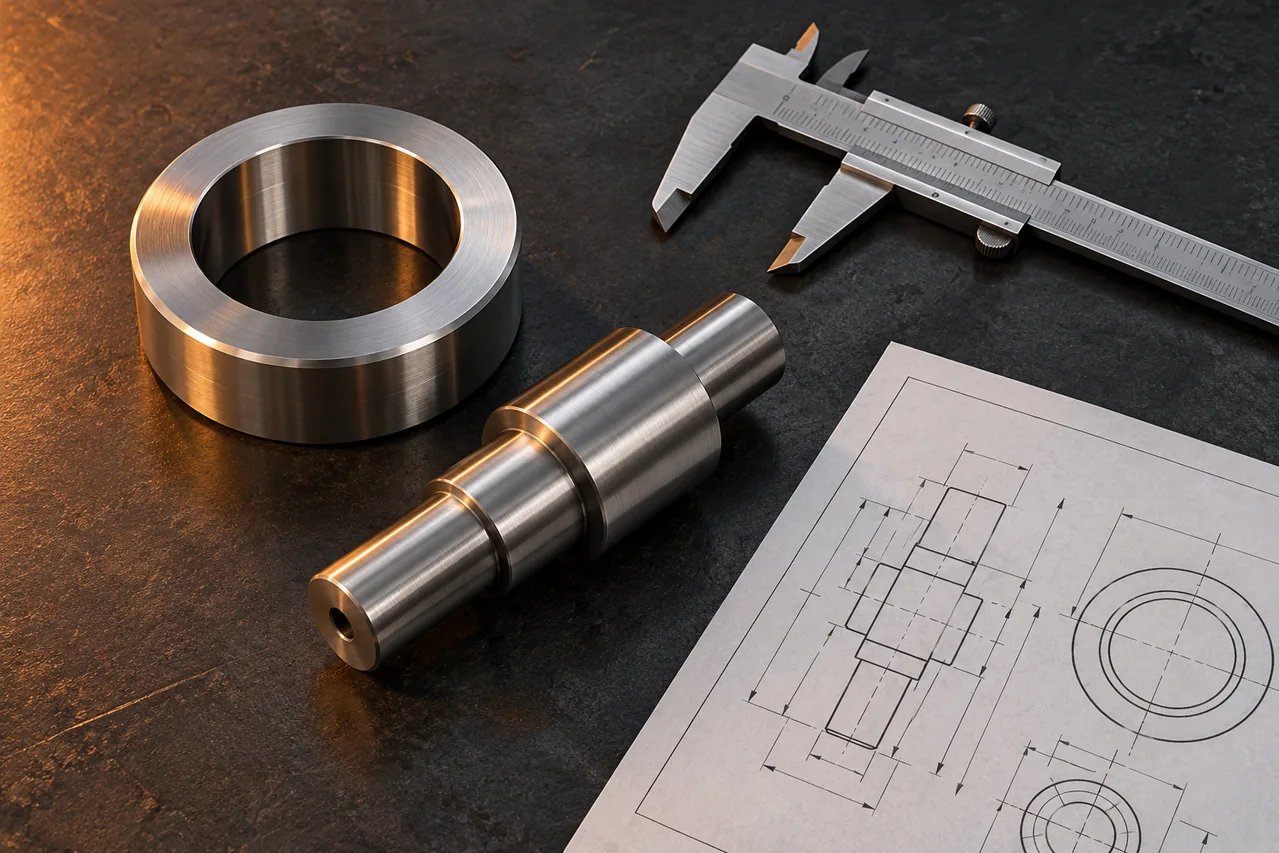
Choosing a manufacturing partner is also choosing how the work will be defined, reviewed and repeated. Here is how to start that conversation with GTF.
01 / FIELD NOTES
Four practical reasons.
REASON / 01
A joined-up route
Forging, machining and dimensional inspection are coordinated around the same component brief. Specialist heat treatment and testing requirements are discussed as part of that route.
Ask us to define the supply condition and process ownership in the quotation.
REASON / 02
A sample with a purpose
Sample development is an opportunity to confirm the component against its drawing and agree what is required before production.
Agree the sample quantity, review documents and approval criteria.
REASON / 03
A quote you can compare
Material, tooling, machining, treatment, inspection and packing can all affect the scope. A complete enquiry helps make those requirements visible.
Compare quotations against the same drawing revision and supply scope.
REASON / 04
A basis for repeat orders
A controlled drawing and an agreed sample create a reference for future batches. Changes to geometry, grade or condition should be discussed before the next order.
Include the approved revision, quantities and required delivery date.
Process illustration · representative, not a facility photograph
02 / DEVELOPMENT, WITH DEFINITION
The first sample sets the reference.
A sample is most useful when everyone knows what is being checked.
Define the drawing revision, material condition, important fits and required reports before development begins. This gives the review a clear basis and makes feedback easier to act on.
Development timing depends on complexity, tooling, material and approval requirements. The schedule is agreed after technical review.
03 / DEVELOPMENT PATH
Drawing to approved sample.
Five stages that turn an enquiry into an agreed component specification.
01
Drawing
Share the latest drawing, material and quantity. Identify critical dimensions, application requirements and any mandatory documents.
02
3D model
Review the component geometry and the features relevant to the manufacturing route. Include your model with the enquiry when available.
03
Tooling
Discuss tooling requirements, machining allowances and the proposed supply condition. Tooling scope and commercial terms belong in the quotation.
04
Sample
Produce and review samples against the agreed drawing and inspection scope. Capture feedback before the production specification is released.
05
Approval
Confirm the approved revision and acceptance requirements. Agree batch quantities, documentation and delivery planning for production.
BEFORE WE MAKE IT
Make the first review count.
A complete brief makes the technical review more useful.
Latest drawing revision and a 3D model, if available.
Material grade, delivery condition and heat-treatment requirements.
Sample quantity, batch size and expected repeat demand.
Critical dimensions, inspection documents and delivery destination.
Q&A / FIELD NOTES
A few useful answers.
How quickly can a sample be developed?+
The schedule depends on material availability, geometry, tooling, treatment and the required approval process. Send the drawing and target date so the team can review a realistic programme.
What order quantity should I include?+
Share both the initial sample or batch quantity and expected repeat demand. Quantities affect planning and the proposed manufacturing route; no universal minimum is assumed.
What happens if my drawing changes?+
Highlight the revision and identify what has changed. Material, tooling, machining and inspection implications can then be reviewed before further production.