
The part starts with the material.
A grade is a starting point. The drawing, service conditions and required final properties turn it into a manufacturing brief.
01 / FIELD NOTES
Explore the material families.
Choose a family to see the grades in our company profile and the details to include with your enquiry.
Carbon steel
The starting point.
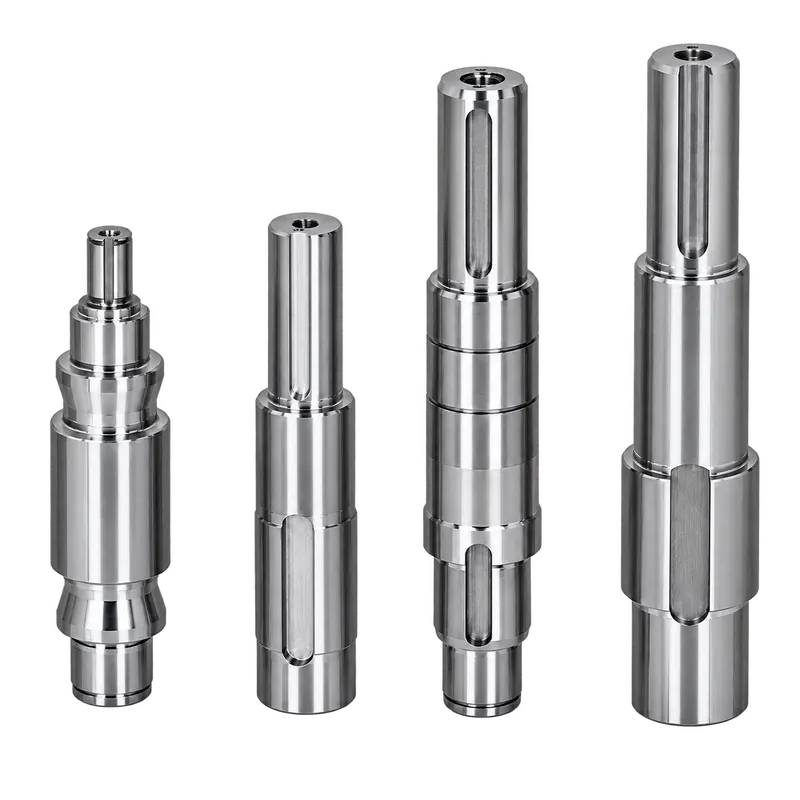
Begin with the part geometry, loading and specified delivery condition. A carbon-steel grade is one part of the brief; machining allowance and any heat treatment complete it.
Enquiry examples
Shafts, pins, hubs and general engineering components in the GTF catalogue.
- State the exact grade and governing material standard.
- Identify machined faces, fits and surface finish requirements.
- Include the required final hardness or mechanical properties, where specified.
Match the grade to the drawing, then agree the manufacturing route.
Grade labels follow the company profile. Similar names do not establish equivalence between standards. Availability, suitability and the manufacturing route are confirmed during technical review.
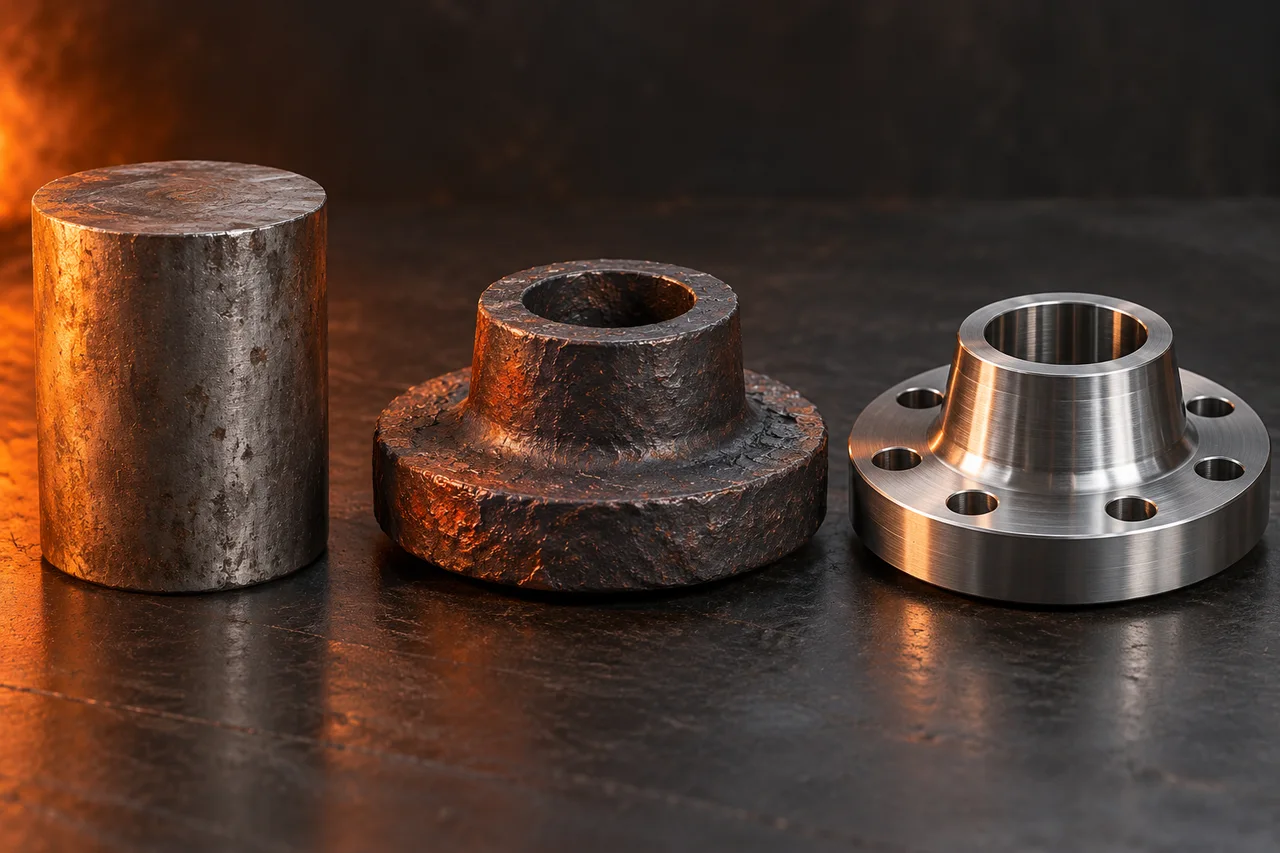
02 / MATERIAL + PROCESS
The same shape.
A different brief.
A part’s geometry does not tell the whole story. Two components that look alike may have different material grades, treatment conditions and acceptance requirements.
Discuss these together. If the design calls for a case-hardened surface, for example, the surface requirement and the core requirement need to be defined separately. The treatment route is reviewed with our specialist partners.
Send the specified grade first. If an alternative is needed, it should be reviewed and agreed before material is ordered.
03 / FIELD NOTES
Turn a grade into a specification.
| Include | What to define | Why it matters |
|---|---|---|
| Material identity | Grade, standard and any supplementary requirements. | Avoids ambiguity between similar trade names. |
| Supply condition | As-forged, machined and any required heat treatment. | Defines the scope of the manufacturing route. |
| Final properties | Hardness, case depth or mechanical requirements where specified. | Establishes the acceptance target. |
| Evidence | Material certificate, traceability and agreed testing. | Aligns the documentation with the order. |
BEFORE WE MAKE IT
Have a specified grade?
Share it with the drawing. We’ll review the material and process together.
Prepare an enquiry- Latest drawing revision and a 3D model, if available.
- Material grade, delivery condition and heat-treatment requirements.
- Sample quantity, batch size and expected repeat demand.
- Critical dimensions, inspection documents and delivery destination.
Q&A / FIELD NOTES
A few useful answers.
Can I request a grade that is not listed?
Yes. Include its full designation and material standard with the drawing. Other grades and non-ferrous materials are reviewed on request; availability and feasibility need confirmation.
Are C45 and EN8 automatically interchangeable?
Do not assume equivalence from the catalogue label. Send the exact material standard and required properties so the intended specification can be checked.
Can I select material from the product photograph?
No. Catalogue images show representative geometry. Material grade, condition and treatment must come from the approved specification.
Your drawing.
Our next move.
From first sample to full production. Let’s make it happen.
Send your drawing